Where do you live?
Location might be important if you owned a Berner.
**Considerations**
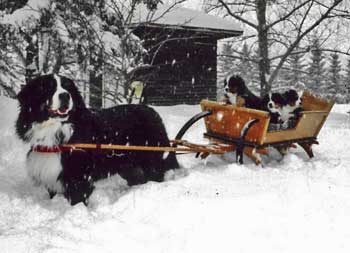
While Bernese were originally bred for their working ability as drafting and all purpose farm dogs , and served as companions Berners today often do not live as their ancestors did. Bernese continue to serve as companion dogs. Berner owners should realize that the original functions Bernese served provided the dogs with a stimulating environment. Where you live will determine to some extent what types of activities you can provide for your dog. You may not live on a farm, but what will matter the most to your Bernese is how you manage your dog in your particular situation with the goal to maintain a workable and mutually rewarding relationship. Ask yourself if you are willing to make a commitment to provide your Berner with a happy medium of stimulating activity for his or her mind and body. Many Bernese owners today find fun working their dogs in obedience , drafting , tracking or herding. You can find out more about these activities by visiting club websites.
Do you have other pets?
Has a bearing
on how a Berner will fit in.
**Considerations**
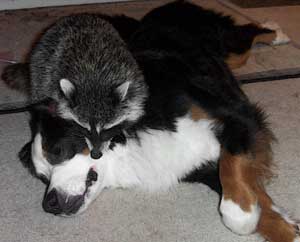
If you do not have other pets it will still be essential for you to train your dog to behave well around other animals should the dog be exposed to them in your community. The presence of other pets can be a source of positive mental stimulation for some dogs. As a single pet owner you may need to find ways to provide your dog with activities to compensate for time the dog will spend without the commaradery that exists in mutiple pet households. If you have other pets it is important to recognize that all pets in your home need to get along. Bernese generally tolerate other animals. Interactions should be monitored to make sure your Berner understands how to behave so as to not aggravate or injure other pets. Especially when Berners are puppies they can be quite boisterous. They can become curious and challenging to other pets. Some Bernese can be aggressive towards other dogs or cats if not taught how to behave appropriately towards them. Sometimes pets that do not get along present significant management problems to owners. Dogs that on occasion do not agree with each other may have to be separated when the owner is absent to avoid unpleasant or dangerous interactions. Berners tend to get quite excited when activities are about to occur or when visitors arrive. When excited some Berners might take offense at the presence of another pet getting too close. Some Bernese have a strong prey instinct and so might chase smaller pets and potentially injure them. Often owners believe another dog will serve as an exercise companion. Some dogs play well together , but some do not. Dogs roughhousing and playing together can be a great form of enjoyment and exercise. But supervision is required to prevent overly excited and exuberant dog pals from hurting each other. If you have other pets tell breeders you speak with about the nature of the pet so they can take that into account in helping to select a Berner for you and potentially help you address any issues that arise in a multi-pet household.
What size are Bernese?"
They are big dogs.
**Considerations**
Bernese are big dogs. Measured at the withers male BMDs are 25 to 27 and one half inches and range in weight from 80 - 120 pounds. Females are 23 to 26 inches and approximately 70 - 100 pounds. In relation to Golden Retrievers Berners can be 2 inches to 6 inches taller and 15 lbs to 65 lbs heavier. When considering whether a big dog is a good choice for you , take into account that you will need to be able to control the dog. You will not be able to simply pick the dog up and keep it from harm or from harming others. Teaching a big dog manners and self control beginning at a young age will make it much easier for you to manage the dog at home and in public when the dog is grown. A hundred pound dog jerking and straining on a leash or jumpng up on strangers can be quite disturbing.Do Bernese shed?
THEY SHED A LOT!!!!!
**Considerations**
Bernese are a double coated breed. Combine this with their large size and try to imagine just how much coat the dog carries and what it will be like when the hair isn't on the dog anymore and is floating around all over the place in your home. If you are looking for a dog that does not shed the Bernese is not for you. Bernese ARE BIG HAIRY DOGS!!!! THEY SHED! THEY SHED ALL THE TIME!!!! A heavy seasonal shedding also occurs once or twice a year. Ask yourself if you have time to spend grooming your dog to keep hair in your home under control. Even with consistent grooming there are times when 'Bernerfur' is an unavoidable fact of life. It gets on your floors , on furniture and it could even get in your food. Ask yourself if allergies to hair might be a problem for your friends or any member of your family. Are you willing to have a lint brush handy for your use by your guests? Does the thought of dog hair in your butter bother you? Do you have the time to vacuum regularly or even daily when your Berner is REALLY SHEDDING A LOT?
Do Bernese have any health problems?
Some do - some do not.
**Considerations**
Any dog , whether purebred or mixed heritage , can develop health problems. The genetic makeup of Bernese as well as environmental factors contribute to the quality of life any dog has the potential to live. As an owner you can positively influence health by providing your dog with an enriched existence including a carefully selected diet and an appropriate physical maintence program. By keeping stress factors to a minimum for your particular dog you will go even further to maintain health. As a breed Berners have significant potential health issues and genetic problems. They include but are not limited to ; hip dysplasia , elbow dysplasia , panosteitis , progressive retinal atrophy , cataracts , bloat , allergies , hypothyroidism and autoimmune diseases. Cancer is the number one killer of Bernese Mountain Dogs. Coping with health issues in affected Bernese can range from managable to severely limiting. Administering low cost daily medications for a relatively minor health concern is quite different from managing a dog that requires surgery or develops any condition which presents lifelong challenges for both owner and dog for the entire life of the dog. How might you handle a dog that due to its genetic makeup required special handling - one unable to navigate stairs due to an orthopedic condition? Temperament is inherited and can impact health in so far as an unsound temperamnt might lead to a dog having greater difficulty coping with routine emotional or physical challenges. What if your dog was extremely shy and dealing with behavior modification techniques to stabilize the dog was beyond your skills as a trainer? Your selection of a breeder can have an impact on your life and on the kind of health issues you and your dog may face. Responsible breeders work hard to breed only healthy stock. They try to decrease the health problems associated with the breed. They test their breeding animals for known inherited diseases. They know the health histories of their dogs - their parents , grandparents , aunts , uncles , sisters and brothers. Buying from such a breeder will significantly improve your chances of getting a healthier dog. To learn more about how some breeders are addressing improving health and longevity in the dogs they produce contact several BMDCA breeders.
Commercial puppy producers or casual backyard breeders and brokers who import foreign dogs may not test their breeding stock for genetic problems. They rarely are familiar with the health histories of their dogs but might tell you the dogs were all healthy and had no genetic problems. Some breeders indiscriminately breed animals for profit without regard to health and genetic issues and without concern for the devastating effects health problems impose upon on dogs and owners alike. Ask questions of breeders ; and don't necessarily take on faith that what they are telling you is so. At BernerGarde you can use the online database to verify whether health information you obtain from breeders is accurate.
How long do Bernese typically live?
Depends on a lot of factors.
**Considerations**
In an attempt to gain a better idea of the age and cause of death in Bernese Mountain Dogs , the Bernese Mountain Dog Club of America conducted a health survey from August 1999 through January 2000. 1322 surveys had adequate information and were included the survey summary. Additional health surveys continue to be conducted by the BMDCA. Based on the original health survey , the mean age of death for Bernese was determined to be 7.1 years. Not all Berners die at this age. Some die younger and very few Berners live past 10 or 12. It is accurate to say that the breed is not long lived in comparison with dog breeds whose lifespan typically extends to 15 or more years. Berner health and longevity information can be found on the main health pages of BMDCA'S site.
Maintaining your Bernese in optimal physical and mental condition undoubtedly will contribute to overall health and serve to increase the possibility for your dog to live the longest time his or her genetics allow. The Health survey also showed that 1182 of 1325 dogs had good or excellent health and only 35 dogs were in poor health. Families of Bernese carry genetic predispositions which influence their age and cause of death. Ask breeders if they keep records on the dogs they produce. Let them explain to you how their breeding decisions are made to influence the age and cause of death in families of dogs they use for breeding. Most Berner owners agree whether their dog passes on at 7 years or 12 , the time spent together is not near long enough.
Do you want your dog to be reliable around children?
**Considerations**
People frequently choose a Bernese Mountain Dog because they have heard they are great with kids. Puppies left to their own devices will often chase and bite as a form of play. Children while playing can be noisy and abrupt in their movements. Some Berners are sound sensitive and may become nervous or disinterested preferring to be in a quieter location when children are playing. Young children and puppies and even adult dogs should be closely supervised to avoid behaviors that could lead to injury of child , dog or both. Berners are big dogs and could potentially frighten a child unaccustomed to interacting with dogs. Due to size a Berner might inadvertently knock over young children or toddlers. As a parent or owner please understand that you will need to spend time teaching children and your dog how to conduct themselves to ensure respectful caring interactions. Ask yourself - do I have the time to provide guidance to children and my dog to foster a safe and comfortable relationship?
How much do Bernese cost?
Price
varies.
**Considerations**
The initial cost involved in obtaining a Bernese depends on from whom or where you buy your dog. Prices range from around one thousand upwards to several thousand dollars. Price is not necessarily a reflection of quality nor does it reflect the upfront and ongoing services offered by the breeder you might think are essential at the time of purchase or those you could potentially desire later. Purchase cost is only a small portion of what it will cost you to maintain your dog from day to day. Think about how much disposable income you have to spend on dog food. Add costs for training classes and routine veterinary care. Does the disposable income you plan to use for your dog affect other things you might want to do with your family or children , like vacations or providing your child with unique enrichment activities? Would it be important to you in determining that you could afford to care for a Berner if your dog developed a catastrophic illness or was affected by an inherited condition that required a lifetime of medications or an expensive medical procedure? Some medications and dietary supplements for a dog of size can run into several thousand dollars a year. If a special diet was indicated for your dog due to allergies or a medical condition that affected the kind of food the dog could tolerate ask yourself - is that extra expense doable? When considering costs , ask yourself whether the breeder of your dog has done everything possible to provide you with a pup that has the best chance of living a life free from debilitating illness. Then ask yourself how you will handle unplanned for expenses that might come up in relationship to owning a Bernese , because that possibility exists. Pet insurance might be worth looking into.
Will you commit to spend quality time to spend with your dog?
**Considerations**
Berners want to be where their people are. Dogs isolated from people seldom thrive. Bernese Mountain Dogs are no exception. Berners need to be members of the family. If you are an outdoorsy person , your Berner will want to be with you. Are you more of an indoor sort? Your Berner will want to be with you there too. Your Berner's needs will vary according to age and his or her individual character and physical makeup. Some things you might want to consider in determining if you have enough time for a Berner follow. Do you have a small yard but lots of parks and time for outings? Do you work full time but can take dog to work once a week or have dog walker available or have safe fenced area for dog in your absence? Is your lifestyle such that your dog can be with people and other animals more than not? Before getting a Bernese ask yourself if you have a dog friendly lifestyle and are willing to spend quality time with your Berner so he or she has the best chance of remaining physically fit and content in your situation. Any dog isolated from people and companionship will become bored and stressed. Many destructive behaviors are a result of boredom and lack of exercise.
How much exercise Do Bernese need?
Depends on the Berner.
**Considerations**
Striking a balance between your lifestyle and schedule and the activity requirements of your dog at various stages of development is challenging to many owners. Bernese can be quite active and energetic , but they are not likely to self exercise adequately in a yard alone. Do not expect a Berner to be your jogging or bicycling partner. BMD's are not built for sprinting and their large size and sturdy frame are not typically well suited for running with a jogger or accompanying a bicyclist. Bernese are rarely natural retrievers. The typical Berner is either disinterested in retrieving or may retrieve once or twice. After a time or two most Berners are likely to wait for you to retrieve the ball yourself! By providing your dog with exercise that meets his or her needs you can expect to have a calmer contented house pet. Several on leash walks per day or at least two 15 to 30 minute off leash play periods will provide most Bernese with an outlet for their energy. For some this would not be adequate. No dog should be required to engage in forced rigorous exercise which could result in injury. Ask yourself if you can provide lots of exercise opportunities for your dog to release pent up energy.
Do you have fencing?
**Considerations**
Keeping a Bernese involves providing a safe environment inside and outside your home. Please consider if you do not have a fenced yard , do you want to strictly monitor your dog when he or she is outside either to relieve itself several times each day or just for play. A large black dog roaming could be a danger to itself and to people , not to mention potentially becoming a traffic hazard. Will your insurance company view your dog as a risk? If you already have or intend to put up a fence for your Bernese , determine whether underground fencing or above ground fencing will provide your dog with a safe place to spend time outdoors for limited periods of time. Do covenents in your neighborhood allow above ground fencing? Will you set up fencing to give direct access to your home ; or will you have a seperate kennel area? Bernese are big dogs ; and while most are not fence jumpers some can go over a 4 foot fence easily. A five foot fence is more difficult for most Berners to jump or climb. If you intend to leave your dog outside when you are absent might a stranger or delivery person have access to the area where your dog is kept? Underground fencing does not keep other animals or people from entering your property and approaching your unattended dog. Would your dog be predictable if approached? Fencing is not a substitute for the human attention and mental stimulation Berners need. Bernese should spend several hours a day out in a yard or park enjoying the outdoors. Fencing is only a means to keep your dog safely confined. Please consider that when Berners are left alone too long they might seek and find undesirable outlets for their boredom. A bored Bernese might dig holes or defoliate shrubbery. Inside a bored dog might chew on furniture or counter surf. These types of destructive behaviors result when owners do not provide appropriate activities for their dog.
Are you considering breeding your dog?
**Considerations**
If you are planning to breed, do you want to do it right?
Breeding dogs
carries with it the responsibility to ensure the dogs used for breeding are in
excellent health and have the potential to produce sound healthy pups. Ask
yourself if you have enough knowledge of the breed to evaluate the
appropriateness of breeding stock. Do you want to get involved in genetic
testing of dogs to be bred prior to breeding to verify their health status? How
will you arrange for a breeding to occur with your dog? Care of a dam and her
pups involves time and expense. Intact male dogs can be more difficult for some
owners to manage than neutered males. Spayed or neutered dogs do not develop
health problems associated with reproduction , and as a result many live
longer than intact Berners. Should you decide to breed your Bernese , be
aware that as a breeder you must have a situation that is appropriate for
raising a litter and the time to adequately socialize and place puppies.
Placement of puppies with responsible owners takes time on the phone and
involves prospective owners visiting your home. It involves evaluating
prospective owners for their capability and willingness to provide a nurturing
lifetime home for a pup. Can you evaluate every puppy in a litter for the
suitability of its individual character and physical traits to meet the
expectations of potential owners? Ask yourself what you would do if a placement
didn't work and the pup you bred was placed in rescue. Ask yourself if an owner
of one of your pups was having problems managing the dog if you have the time
and knowledge to help them resolve the problem. Would you want an owner to
return a boisterous untrained dog to you? Breeding Bernese is not something
that should be done on a whim. Should you want to breed your Berner , do so
conscientiously and with compassion for the lives you have created. For more
information on becoming a responsible breeder go to Things Breeders Do
located in the Puppy Buyer's Guide.
What kind of climate do you live in?
Bernese are affected by
extreme temperatures.
**Considerations**
Berners are big black heavy dogs with a thick double coat. They were bred to live in the Alps. Berners are heat intolerant - some more so than others. Owners who live in climates with hotter temperatures should be aware warmer weather presents challenges in providing their dog with exercise during cooler times of the day to avoid overheating. Berners do best in a climate-controlled environment during hot weather. Fans can help a Berner to stay cool on hot days. Dogs unaccustomed to living in high temperatures are at a greater risk for overheating than those who have been live in a hot climate. If you must leave you dog outside during a hot or humid day , be sure it has plenty of shade and fresh water. If traveling with your Berner during hot weather , do not leave your dog unattended in your vehicle. Consider whether your dog will be comfortable and welcome in places where you vacation or at a second residence. Berners love the cold and snow. Young puppies and geriatric dogs should be monitored closely in temperature extremes since their ability to regulate their body temperature is less than that of a mature healthy Bernese.
What kind of temperament do Bernese have?
Bernese require training to become reliable pleasant
companions.
**Considerations**
The Bernese should come into the world with a confident temperament , but the truth is some Berners are born with a more outgoing and confident nature than others. Most well-bred well-socialized Berners display a sweet gentle disposition. It is important to acknowledge that each Berner has its own way of coping with the world. Bernese generally speaking are loving and devoted to their families. Some are indifferent to strangers. These traits are considered typical in the breed. Some Berners are suspicious of strangers , but in time will make friends with them. Some Berners are less discriminating about who gives them attention greeting family and friends or strangers with assured confidence and inviting attention with wagging tails. The breed is generally gentle and affectionate to those they have accepted. However , some less trained Bernese remain boisterous and a bit bossy without proper guidance. An important consideration in managing a Bernese is understanding the ways in which your dog reacts in different situations. Prospective owners should be aware that each dog has a comfort zone. A dog owner is responsible for knowing the comfort zone of their dog. Owners should be able to predict how their dog will react if approached or startled and during the daily routines in household and be available to offer the dog appropriate guidance. The Bernese needs guidance to understand what is expected of him particularly in the area of self discipline development as a youngster.
Bernese Mountain Dog Info Pages